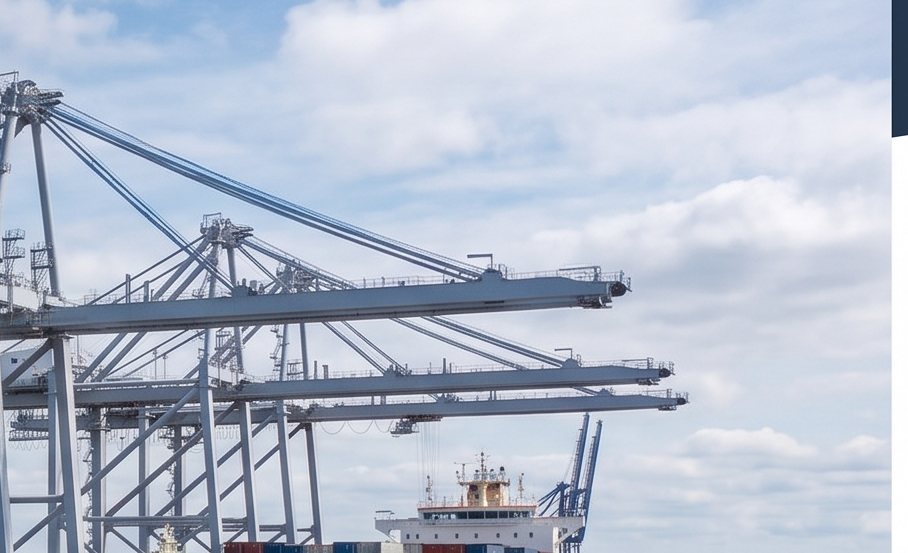
What we actually do
Six services. Take the ocean leg on its own if that is all you need, or hand over the whole movement and get one invoice at the end of it.
Ocean freight
A slot every week, whether you fill a container or a corner of one.
Customs and tariffs
Both declarations, and the origin work behind them.
Bonded warehousing
Hold stock with the duty unpaid.
Inland transport
Road, rail and barge at either end.
Temperature controlled
Reefer positions, logged end to end.
Project cargo
The things that will not fit in a box.
Service 01
Ocean freight
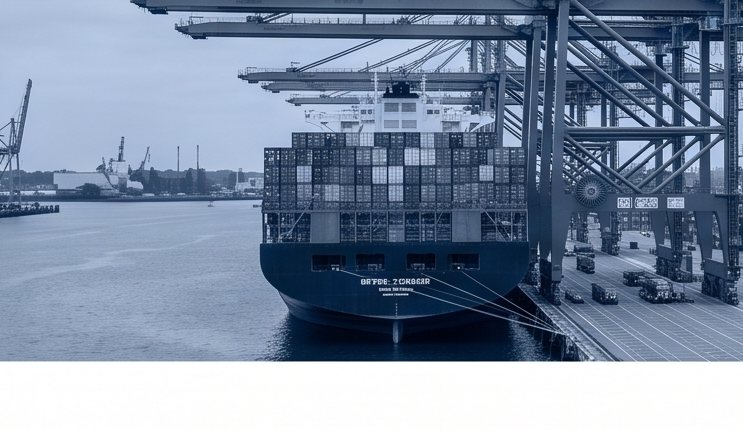
A fixed-day weekly departure in each direction, on a contracted slot allocation with carriers already running the North Atlantic.
Eastbound sailings leave Halifax on Friday and reach Rotterdam in about eleven days. Westbound leaves Rotterdam on Tuesday and takes roughly twelve. Because the allocation is contracted rather than bought week to week, your space survives the peak season, when spot cargo is what gets rolled.
- Full container
- 20 ft, 40 ft, high cube
- Shared container
- From one pallet
- Refrigerated
- Every sailing
- Open top and flat rack
- On request
- Dangerous goods
- Most classes
- Transit
- About 11 days
Service 02
Customs and tariff advisory
Customs is handled in-house on the Canadian side, and in Rotterdam by our licensed partner who holds the Dutch permissions.
The duty on a misclassified consignment can run to several times the freight bill, and it usually surfaces months after delivery. So the classification happens before the first booking. We test the goods against the CETA rules of origin, prepare the declaration, and hold the records for the six years Canadian law expects.
There is also a Dutch mechanism worth knowing about. An Article 23 licence lets an importer defer import VAT to its periodic VAT return instead of paying it at the border, which nets to no cash impact at all. A company without a Dutch establishment cannot use it on its own; it needs a fiscal representative, who then carries joint liability for the VAT. Setting that up is part of what we arrange for regular importers.
- Tariff classification, plus advance ruling applications where the answer is genuinely arguable
- Origin assessment against the CETA product-specific rules
- Import and export declarations in Canada and the Netherlands
- Article 23 VAT deferment and Dutch fiscal representation
- Valuation, including royalties and assists
- Bonded movement and duty deferral
- Audit support, voluntary disclosure and appeals
Service 03
Bonded warehousing
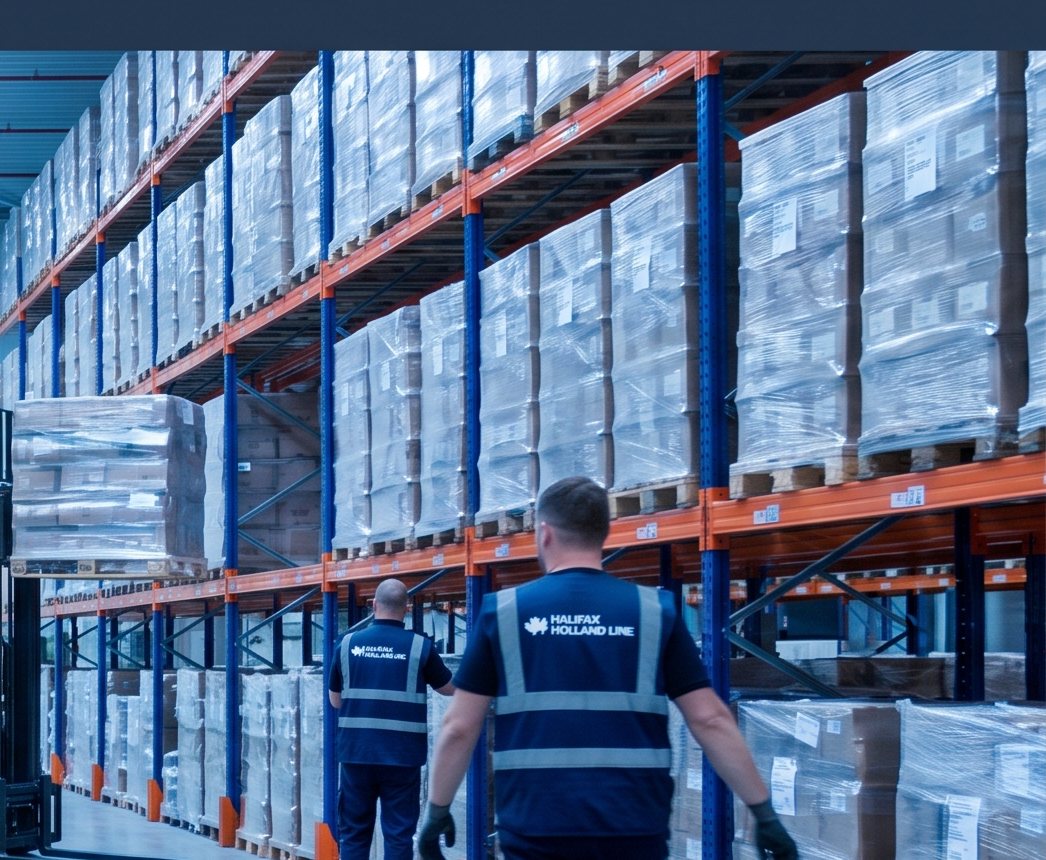
Space at Dartmouth and at Maasvlakte, both under customs bond, so duty and import tax fall due only when the goods enter the market.
If you hold a season of stock, this is the difference between financing a year of inventory and financing a month of it. It also turns a run of part loads into full container economics, and it buys time to decide which market the goods should enter while the tariff picture is unsettled.
Consolidation
Several suppliers combined into one container before sailing.
Bonded storage
Goods held under bond with duty deferred until release.
Cross-docking
Straight from vessel to outbound vehicle without storage.

Service 04
Inland transport
Collection anywhere in Atlantic Canada, delivery anywhere in the Benelux and western Germany, arranged on the same booking as the ocean leg.
Booking the inland leg alongside the ocean leg means the haulier already knows when the vessel berths, so the container is not sitting on demurrage while somebody makes a phone call. We price road, rail and barge side by side with the transit time against each, and you pick.
- Canada
- Atlantic provinces, Quebec, Ontario
- Europe
- Benelux, western Germany, northern France
- Modes
- Road, rail, inland barge
- Bonded movement
- Available both sides
Service 05
Temperature controlled
Powered positions on each sailing, with continuous logging and the health paperwork raised well ahead of loading.
Seafood out of Nova Scotia and horticultural stock out of the Netherlands carry this lane, and both are unforgiving cargo. For seafood the processing plant has to appear on the EU approved establishment list, the shipment needs a health certificate from the Canadian Food Inspection Agency raised through TRACES NT, and Fisheries and Oceans has to issue a catch certificate. CFIA quotes three days to validate a certificate for live product, which is why we start that clock early.
On the equipment itself, set points are monitored from plug-in to plug-out and alarms go to a duty phone.
- Range
- Minus 30 to plus 30 degrees
- Logging
- Continuous, supplied with the file
- Controlled atmosphere
- On request
- Pre-trip inspection
- On every unit
Service 06
Project and heavy cargo
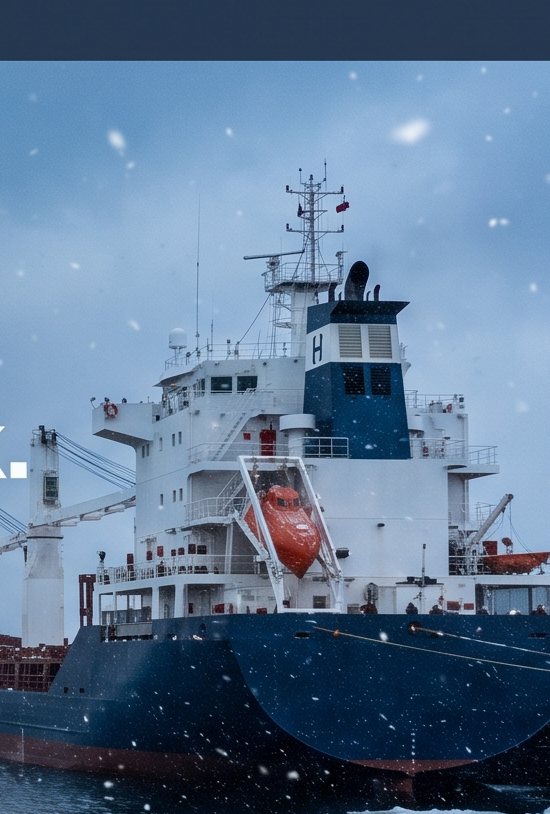
Machinery, breakbulk and out-of-gauge units, surveyed before anything is lifted.
The expensive problems on project cargo are nearly always on land. A transformer that will not pass under a bridge on the last twelve kilometres is a bad thing to find out on delivery day. We survey the route, confirm lifting points with the manufacturer, get the permits arranged, and quote a date after that.
- Route surveys and permit applications on both continents
- Lift planning, lashing design and marine warranty survey
- Flat rack, open top and breakbulk stowage
- Heavy haulage and specialised inland equipment
Not sure which of these you need?
Describe the movement in a sentence or two and we will tell you the shortest way to land it. Sometimes the honest answer is that a different routing suits you better.